

Breaking in a new car
What still applies today – and what does not
Do you still have to break in a car at all today?
The ADAC puts it cautiously: break-in has lost importance. That is true to a degree. The classic oil change after 1,000 kilometres, for example, is outdated today. Thanks to more precise manufacturing, far fewer particles reach the oil, and modern oil filters hold back more of them. Depending on the model, the first oil change intervals now reach up to 30,000 kilometres. What counts is your vehicle’s service booklet.
We still stand at the upper end of the recommendations, and the reason is simple: In mechanical engineering you break in everything that runs against something else – and an engine is nothing other than mechanical engineering. That is the common thread of this article.
On the subject of breaking in a car, the majority in the relevant forums are on the same side. As benefits, the drivers there name lower oil consumption, lower fuel consumption, sometimes more power and a longer service life. But there is also the opposing position in the community: you should not drive too conservatively and should not make the engine “tired”. That old rules are not automatically wrong just because they are old is shown by the short-trip debate as well, by the way. You can read more about it in this article: Short trips – only harmful to the diesel engine?
What happens in the engine during break-in
An engine works in the thousandth-of-a-millimetre range, and the metals used expand to different degrees when they heat up. That is exactly why the components only really fit together after a certain running time. Two things are decisive here:
Both need time and moderate load. Both take damage if you demand too much too early.
Why the cylinder wall is not smooth
The cylinder bore is deliberately not smooth. It carries a fine milled or honed pattern to which the oil adheres – only this creates a load-bearing oil film. If the engine is loaded too heavily too early, this pattern is worn away over a large area instead of smoothing out cleanly. The consequences are higher oil consumption, accelerated wear and a shorter engine service life. Higher oil consumption alone is not proof of a destroyed honing pattern, however – other causes come into question for that too. In any case, a pattern that has been worn away cannot be undone.

The anti-wear layer – thinner than you think
During bedding in, the additives in the oil form an anti-wear layer on the metal surface, the so-called tribofilm. In the initial phase this layer is about 10 nanometres thick; fully developed it reaches around 100 to 150 nanometres. Our own figure for it is 0.02 to 0.05 micrometres, that is 20 to 50 nanometres – a value that lies plausibly between the initial and the final state. For comparison: a human hair is about 50,000 to 70,000 nanometres thick. This layer only builds up if the oil can do its work. Cold oil does not lubricate properly, which is why higher engine speeds belong in a warm engine only.
Breaking in the engine: the stages
How long the whole thing takes depends on the manufacturer and on the engine: narrowly defined it is 1,000 kilometres, broadly defined 1,000 to 3,000 kilometres. We divide the phase into three stages:
The first 100 kilometres
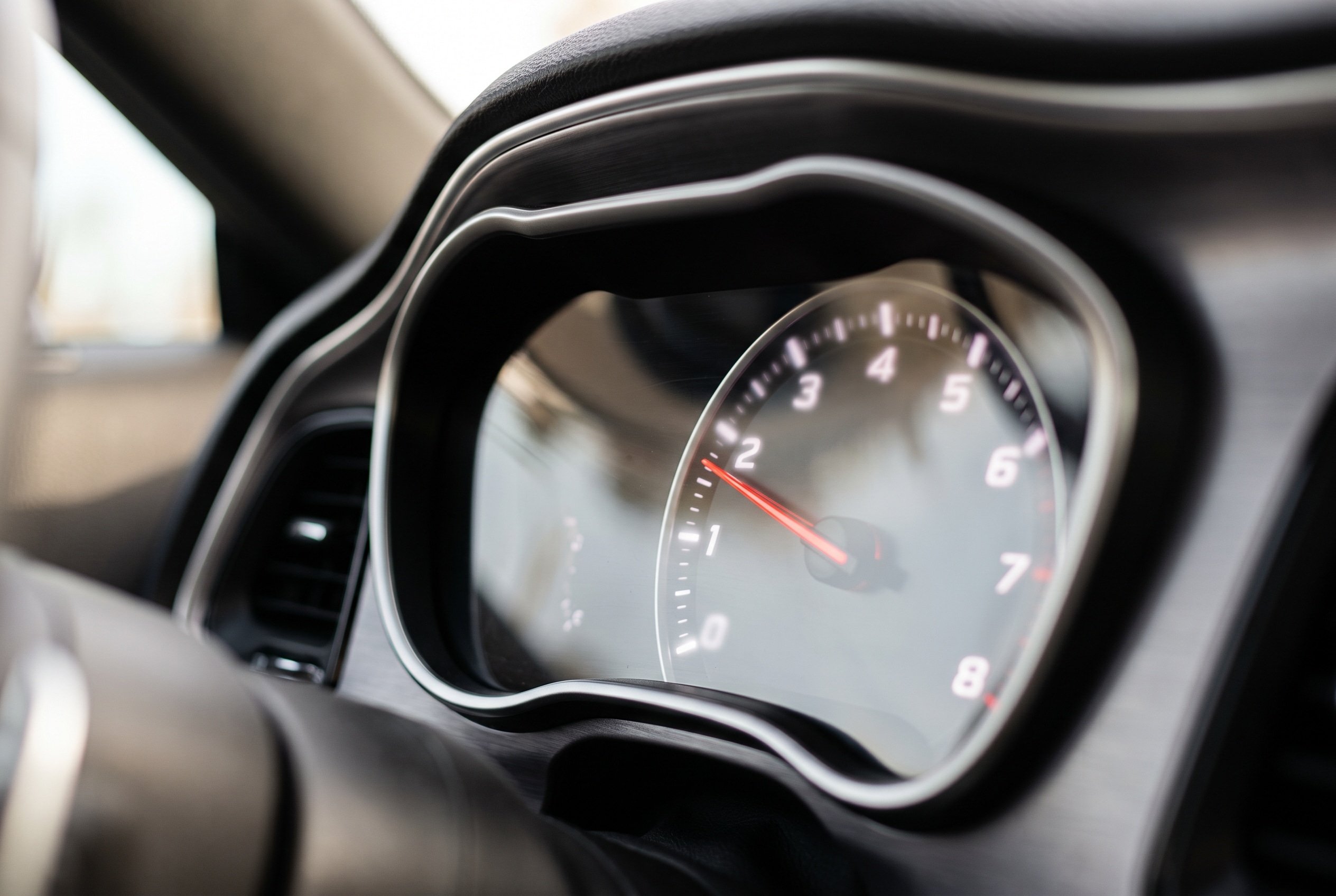
Here we are stricter than the recommendations you will otherwise read. The ADAC names as a limit at most 4,500 rpm for petrol engines and at most 3,500 rpm for diesels. Our own recommendation for the first 100 kilometres lies well below that: keep the engine speed between 1,400 and 2,500 rpm, with roughly a quarter to two thirds throttle. So anyone who googles engine speed for breaking in a new car finds two different worlds of numbers – the ADAC limit is the upper bound, our recommendation the comfort range.
The cold engine matters in this stage too: high engine speeds have no place with cold oil. Whether you should let it warm up while stationary for that is something we clarify in this article: Letting the engine warm up while stationary?
Kilometres 100 to 1,000
Now more is allowed – but in motion, not at a fixed value. Do not break in at a constant engine speed, but with changing medium engine speeds. A country road is better suited to this than a constant motorway stretch. As a transferable rule of thumb: at most two thirds of maximum engine speed, and increase the maximum engine speed continuously over the course of the break-in phase. The speed stays below 160 km/h.
Just as important is the other direction: avoid low-rev driving with a lot of throttle. That increases friction and heat and is the more unpleasant load for a fresh engine. Between 600 and 1,000 kilometres we additionally drive deliberately in 2nd and 3rd gear for two to three seconds at about 1,000 rpm below rated speed. You notice that something is happening from the consumption: fuel consumption drops noticeably over the first thousand kilometres.
From 1,000 kilometres
From here you increase the speed step by step and pay attention to unusual engine noises. Unusual noises do not necessarily come from the bedding-in behaviour – but they are the best reason to listen more closely in this phase instead of turning up the radio. Whether the break-in phase for your vehicle ends at 1,000 or only at 3,000 kilometres is stated in your owner’s manual.
Breaking in a new car: what the manufacturers specify
This is where it becomes confusing, because the specifications differ considerably depending on manufacturer and model. The following figures come from forums, that is from user statements – not from manuals we have to hand:
| Vehicle (user statement) | Stated break-in distance |
|---|---|
| Porsche 992 | 3,000 km |
| Porsche 991.2 GT3 RS with particulate filter | On-board message ended after 1,500 km although the manual named 3,000 km |
| BMW M2 | 2,000 km |
| AMG variant | 1,500 km, at most 140 km/h, at most 4,000 rpm |
Break-in distances for individual models as stated by users
What you can take from this is not the individual figure but the range: between 1,500 and 3,000 kilometres there is a factor of two.
Breaking in brakes – after every replacement too
Breaking in does not only concern the engine, and it does not only concern new cars. With brakes you have to keep two situations apart:
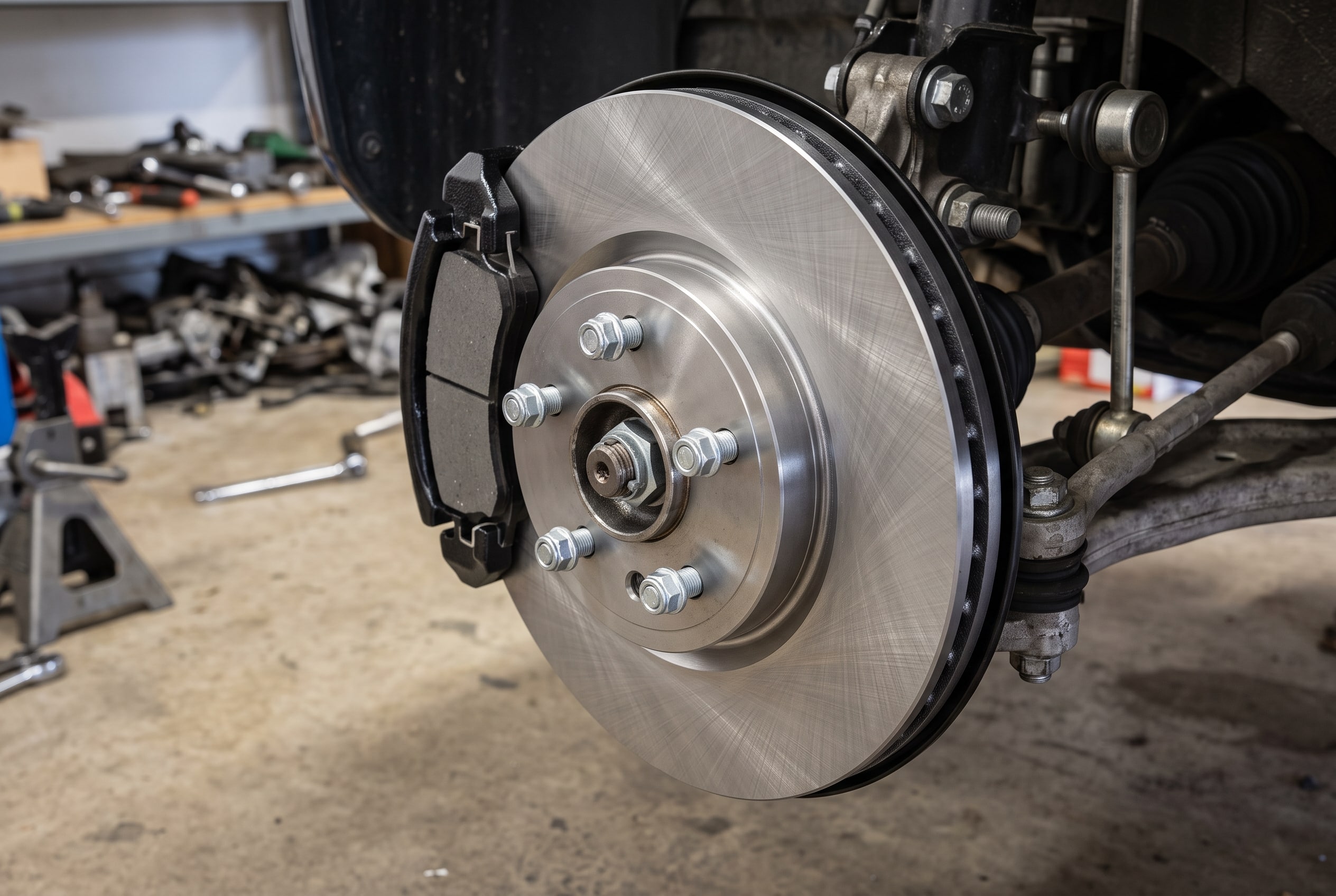
This is how bedding in works after a replacement: around 30 braking manoeuvres from medium speed, that is about 100 km/h, with moderate deceleration. Each braking manoeuvre lasts no longer than three seconds, the target speed is 50 km/h. After half of the braking manoeuvres you reduce the target speed to 25 km/h. In the first 250 to 300 kilometres you avoid emergency braking as well as extreme, shock and violent braking. In the process pads and discs bed in against each other; the result is an even braking effect and a longer service life.
We did this ourselves after a brake replacement, and the difference was clearly noticeable.
Breaking in tyres: 50 or 500 kilometres?
When breaking in tyres the sources seem to contradict each other clearly:
| Figure | Source |
|---|---|
| 50 to 100 km to wear off production residues | VW via AUTO BILD |
| up to 150 km to wear off the release agent | Autozeitung, auto motor und sport |
| first 300 km no high cornering speeds | AutoScout24 |
| first around 500 km not at the grip limit | ADAC |
Tyre break-in figures compared by source
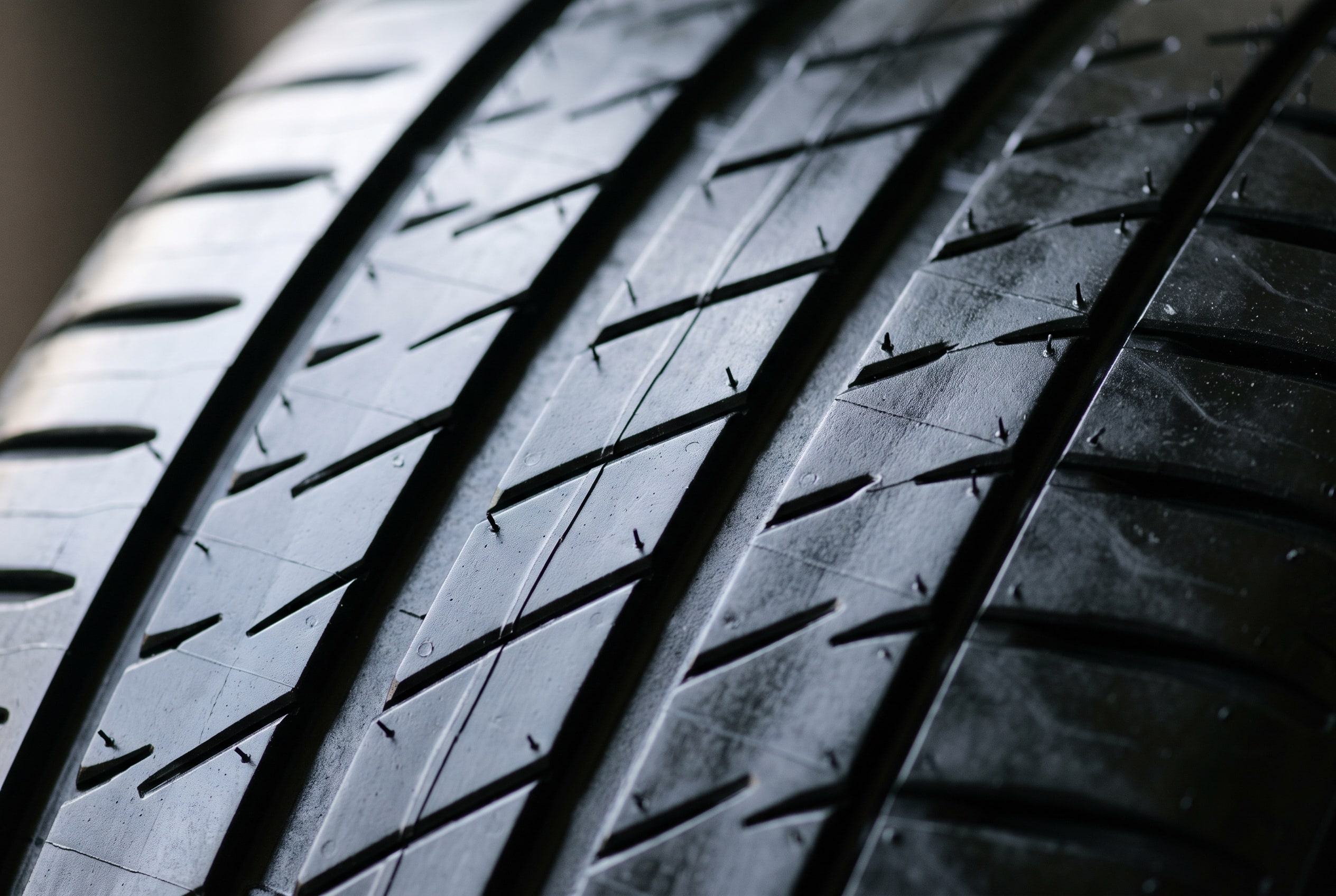
The contradiction is resolved quickly, because the figures describe two different things: the release agent from production is worn off after around 100 kilometres. Full grip level, on the other hand, is only reached after several hundred kilometres. So the short figures refer to the surface, the long ones to the handling.
With the suspension you are through quickly: in the first 1,000 kilometres you should not load it up to the maximum payload, otherwise it is relatively insignificant.
Breaking in an electric car: what is different here
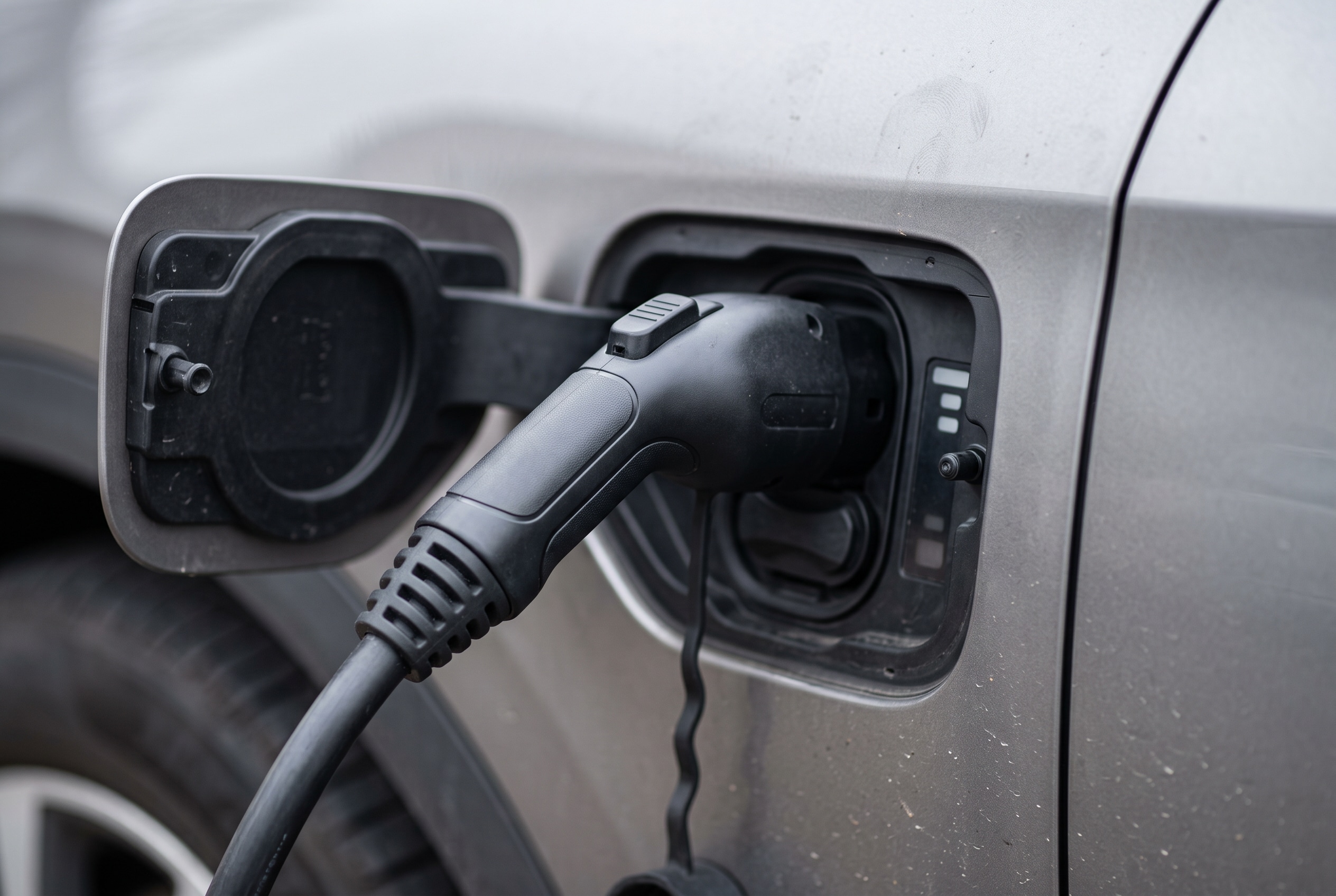
When breaking in an electric car the most important point falls away: the electric drive requires no special break-in phase, and according to VW the battery does not need any special break-in measures either. What is decisive here instead is the charging behaviour – so do not leave the battery parked fully charged and work with medium states of charge.
Everything else stays: suspension, brakes and tyres follow the same rules as with a combustion engine. One particularity is even added. Because recuperation barely demands the friction brake, VW recommends braking moderately without recuperation now and then. In the first 600 kilometres the braking effect is reduced. In general: drive gently for the first 1,000 to 1,500 kilometres, no kickdown.
Conclusion: is breaking in worth it?
Yes. The reason is simple: in mechanical engineering, everything that runs against something else is bedded in, and an engine is nothing other than mechanical engineering. In forums one user reports, for example, that his carefully broken-in vehicle was around 10 km/h faster than a comparison vehicle – but he himself concedes that production tolerances distort such a comparison. We do not base our position on individual cases like that. We do base it on the principle behind them.
In concrete terms this means for you: the first 100 kilometres between 1,400 and 2,500 rpm, up to 1,000 kilometres changing medium engine speeds below 160 km/h, no low-rev full throttle – and bed in the brakes after every brake replacement. The effort is small, the risk of leaving it is borne by the engine alone. Which units last particularly long in the end is something you can read in this article: The longest-lasting engines
How strictly do you break in your new car – by the manual or by feel?
Frequently asked questions
More Articles
Retrofit Speed Limit Info: Code Your BMW G Series Yourself!
Speed Limit Info nachrüstenBMW G-Serie selbst codieren Die Kamera sitzt oben in der Frontscheibe, das Navi kennt jede Straße –…

Unlock Original BMW CarPlay – DIY, Cheap & Easy
Retrofitting BMW Apple CarPlay Yourself, Cheap & Easy You want to use Apple CarPlay in your BMW but do not feel like…

Does My BMW Have a WiFi Antenna?
Does my BMW have a WiFi antenna?Here is how to find out! Does your BMW even have a WiFi antenna? Especially anyone who wants Apple CarPlay…
